Commercial Waste Reading: Recycling and Sustainability Strategy
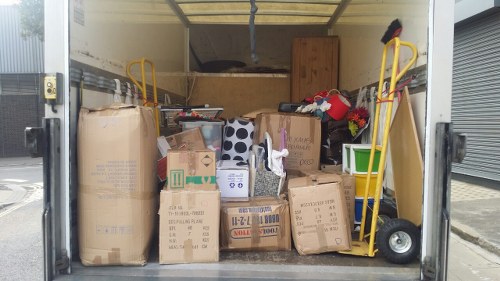 Commercial Waste Reading operations are evolving to support an eco-friendly waste disposal area and a truly sustainable rubbish area across the town and surrounding boroughs. This page outlines our approach to improving recycling rates, reducing carbon from collections and building stronger links with local partners. Our vision for commercial waste in Reading emphasises measurable targets, practical infrastructure and community-focused reuse.
Across the boroughs, local services already separate streams into dry recycling, food and organic waste, glass banks and residual collections — a method mirrored in commercial recycling in Reading to boost capture rates and reduce contamination. We work with businesses to adopt consistent bin segregation that aligns with municipal kerbside policies, making transfer easier at local facilities and increasing overall diversion from landfill.
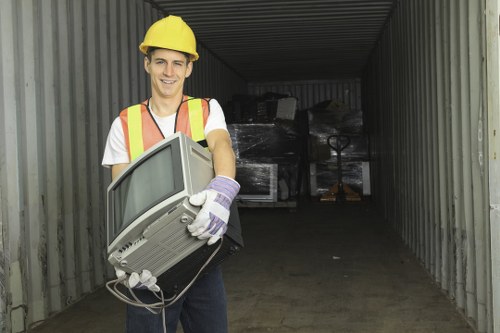 A core element of the plan is a clear recycling percentage target: we are committing to a 60% recycling and reuse rate for commercial waste by 2030, with interim milestones (45% by 2026). Achieving this relies on data-led route optimisation, targeted staff training and incentives for tenants in multi-occupancy sites to separate waste at source. The target applies across commercial rubbish Reading services and underpins investment in low-carbon fleets and transfer infrastructure.
Local transfer stations play a critical role. Reading’s proximity to several transfer and materials recovery facilities means commercial loads can be consolidated and sorted closer to origin, reducing haul distances and emissions. We partner with nearby transfer stations and MRFs to ensure commercial recycling Reading benefits from rapid processing, improved material quality and reduced contamination penalties.
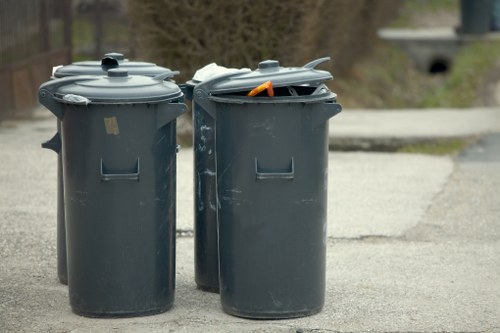 To support reuse and charity partnerships, the scheme prioritises redistribution of good items. We regularly collaborate with local charities and community groups that accept furniture, textiles and surplus office supplies. These partnerships not only prevent useful goods entering the waste stream but also support social value in the sustainable rubbish area — providing affordable items to residents and charities alike.
Our network includes a mix of commercial collection points, charity drop-off coordination and scheduled bulk collection events that route items to appropriate partners. Typical collaborations include charity shops, community reuse centres and food redistribution networks that take surplus edible items collected via segregated food waste or direct donation programmes.
Fleet decarbonisation is another cornerstone. We are progressively deploying low-carbon vans and smaller electric vehicles for inner-town collections and urban drop-offs, complemented by hybrid or biomethane-powered vehicles for heavier loads. These vehicles reduce NOx and CO2 in built-up Reading areas and support quieter, more efficient service operations for commercial rubbish Reading.
Beyond vehicles, route planning software helps cut empty miles and cluster pickups to minimise fuel consumption. Low-carbon vans are used for sensitive city-centre runs where vehicle size and emissions are most impactful, while larger transfer journeys are optimised for full loads to transfer stations to maintain a low-carbon profile across the whole collection chain.
We also highlight recyclable streams common to the local economy — packaging waste from retail, cardboard from distribution hubs, food and green organics from hospitality and landscaping firms, and light-building materials from small contractors. Recognising these streams allows business owners to adopt the right bins for mixed recycling, organics and hazardous materials to meet borough guidance and improve sorting at source.
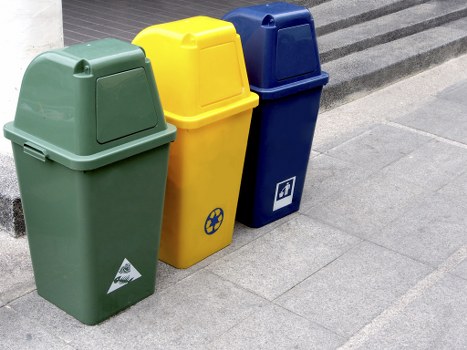 Collaboration comes in several forms: direct service agreements with businesses, third-sector partnerships and community engagement to encourage separation and reuse. Key actions include:
- Infrastructure upgrades at collection points and consolidation yards near transfer stations.
- Partnerships with charities for redistribution of furniture, textiles and surplus stock.
- Incentives for businesses that consistently meet contamination and segregation standards.
These measures create a resilient eco-friendly waste disposal ecosystem where commercial waste streams are treated as resources rather than costs. The combined strategy supports local employment, reduces landfill tax exposure and aligns campus and borough policies for consistent commercial recycling Reading outcomes.
Monitoring, Reporting and Continuous Improvement
Transparent targets and data
Regular reporting against the 60% recycling target is essential. We will publish progress on material tonnages, route efficiencies and vehicle emissions, and calibrate action plans where numbers show persistent contamination or low capture. Emphasis will be placed on training frontline staff and site managers in best-practice segregation and commercial disposal techniques.In summary, our approach to commercial waste Reading and the sustainable rubbish area is comprehensive: defined recycling percentage targets, operational links to local transfer stations, active partnerships with charities for reuse, and a rolling programme of low-carbon vans and optimisation technology. Together these efforts aim to create a circular, low-emission local economy that makes commercial waste a source of value and environmental benefit rather than a problem.
