Commercial Waste Reading Health & Safety Policy
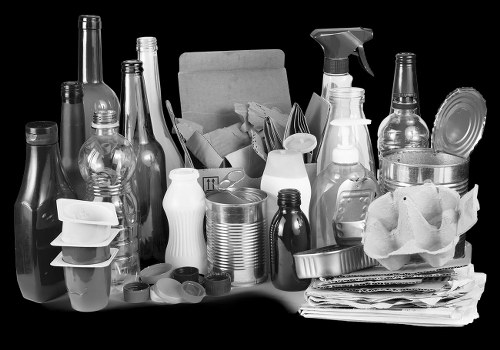 This Health and Safety Policy sets out the standards and practices for safe operation of commercial waste management and rubbish services across our service area. It applies to every team member, contractor and associated worker involved in commercial waste collection, transfer, storage and disposal. The policy emphasises proactive risk assessment, incident prevention and continual improvement so that business rubbish collection in Reading and neighbouring service zones is conducted with respect for staff, clients and the environment.
The purpose of this framework is to provide clear, auditable procedures for handling all forms of waste generated by commercial premises. Responsibilities are defined at company and individual level: managers must ensure systems are in place, and employees must follow safe working practices. Strong emphasis is placed on training, safe vehicle operation, manual handling, hazardous waste segregation and use of personal protective equipment (PPE).
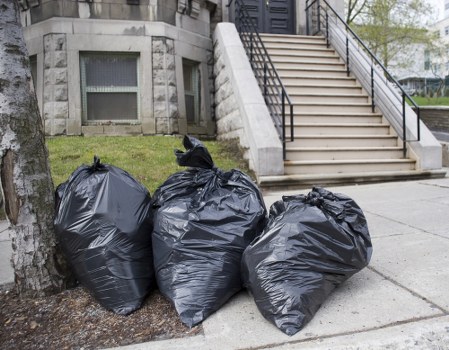 The policy covers specific operational areas including loading docks, compactors, waste storage yards and in-cab safety. It requires pre-shift briefings, dynamic risk assessments on arrival at client sites and documented checks of lifting equipment and restraints. Regular maintenance of vehicles and containment units is a core requirement to prevent spills and mechanical failures that could endanger workers or the public.
To reduce risk the company implements a hierarchy of controls: eliminate where possible, substitute, engineer controls, introduce administrative controls and ensure appropriate PPE. Elimination can include encouragement of waste minimisation at source; engineering controls include secure locking mechanisms on bins and mechanical lifting assistance. Administrative measures include documented safe systems of work and permit-to-work processes for high-risk tasks.
 Key responsibilities are allocated as follows: senior management retains overall accountability for health and safety policy, supervisors control day-to-day implementation and drivers/operatives are responsible for following documented routines and reporting hazards. All employees must participate in induction and refresher training on safe lifting, traffic management, hazardous waste handling and emergency response. Records of training, toolbox talks and competence checks are maintained for audit and continuous improvement.
Controls for specific hazards are detailed within operational procedure documents. These include segregation of recyclable materials, safe handling of sharps and chemical wastes, spill kits and secondary containment for fluids, and clear labelling for mixed loads. For rubbish collection across the commercial service area, route planning minimises time in high-risk environments, reducing exposure to moving traffic and adverse weather conditions.
Emergency preparedness is integral: the policy requires accessible first aid kits, trained first-aiders and clear accident reporting procedures. Fire safety arrangements for waste storage areas must be enforced, including ignition source control and combustible waste management. Incidents are investigated promptly with corrective actions recorded to prevent recurrence. Employees are encouraged to report near-misses to support a culture of openness and continuous improvement.
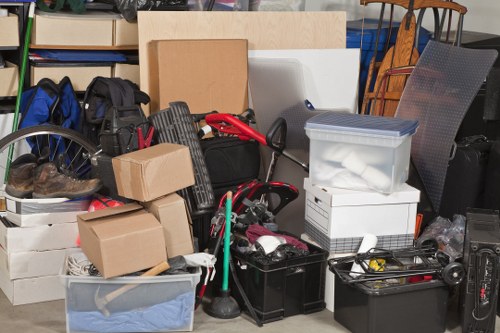 Safe vehicle operation forms a major part of the policy. Drivers must perform pre- and post-shift vehicle checks, secure all loads and adhere to speed limits and parking protocols while performing collections. Communications equipment should be used responsibly; fatigue management measures include maximum driving hours and mandatory rest periods to reduce the risk of accidents during business rubbish collection.
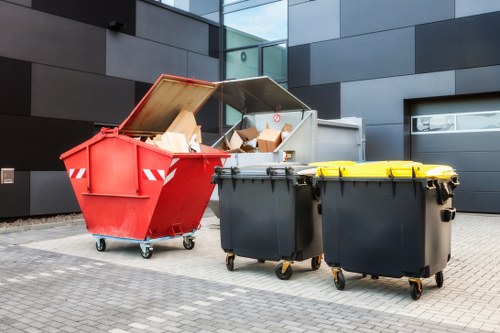 Monitoring and review mechanisms include regular site inspections, performance metrics for incidents and near-misses, and planned audits of compliance with the commercial waste safety standards. The policy is reviewed annually, or sooner following a significant change in operations, an incident, or legislative update. These reviews ensure the rubbish company service area remains aligned with best practice and evolving industry standards.
Training, PPE and Competence
All operatives are provided with appropriate PPE which may include high-visibility clothing, safety boots, gloves and eye protection depending on task-specific risk assessments. Training covers manual handling, safe use of lifting equipment, chemical hazards, and procedures for dealing with sharps and biological waste. Competence is reviewed through observation, practical assessment and refresher training intervals to ensure ongoing capability.
Responsibilities and Record Keeping
The policy requires clear documentation. Records to be maintained include:
- risk assessments and method statements
- training and competence records
- maintenance and inspection logs for vehicles and equipment
- incident and near-miss reports with corrective actions
Commitment: The company commits to implementing this health and safety policy across its commercial and business waste services, ensuring the protection of workers, clients and the public while delivering reliable rubbish collection and waste management. Regular communication of safety expectations and an open reporting culture are fundamental to achieving these objectives.
Review and Amendment: This policy will be reviewed at least annually, and when operational changes occur. Management will allocate adequate resources to meet the requirements of the policy and to ensure safe, legal and environmentally responsible waste services across the service area.
Signed on behalf of senior management: [Policy approval record retained in company files].
