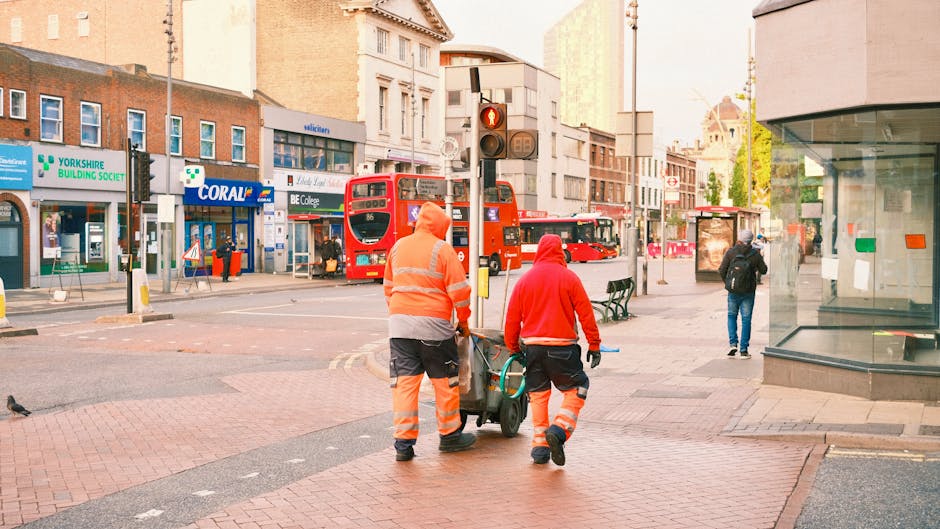
Rubbish removal for Broad Street shops in Reading
Running a shop on Broad Street in Reading is busy enough without piles of packaging, broken fixtures, back-room clutter, or end-of-day rubbish getting in the way. Whether you manage a small boutique, a cafe, a convenience store, or a larger retail unit, rubbish removal for Broad Street shops in Reading needs to be quick, tidy, and dependable. Nobody wants sacks sitting near the front window, a delivery area blocked by cardboard, or a sudden clearance job right before opening time. Truth be told, it only takes one busy week for waste to become a nuisance.
This guide walks through how shop waste removal works, what it can solve, and how to choose the right approach for a busy high-footfall street. You will also find practical tips, compliance reminders, a simple checklist, and a clear comparison of options so you can decide what fits your shop best. If you want a broader view of commercial waste support, you may also find business waste removal and waste removal useful alongside this page.
Table of Contents
- Why Rubbish removal for Broad Street shops in Reading Matters
- How Rubbish removal for Broad Street shops in Reading Works
- Key Benefits and Practical Advantages
- Who This Is For and When It Makes Sense
- Step-by-Step Guidance
- Expert Tips for Better Results
- Common Mistakes to Avoid
- Tools, Resources and Recommendations
- Law, Compliance, Standards, or Best Practice
- Options, Methods, or Comparison Table
- Case Study or Real-World Example
- Practical Checklist
- Conclusion
- Frequently Asked Questions
Why Rubbish removal for Broad Street shops in Reading Matters
Broad Street is one of those places where presentation really matters. People notice what is outside your shop before they notice what is on the shelves. If waste builds up, it can make a clean business look untidy very quickly. Bags of refuse near the entrance, flattened boxes leaning against a wall, or old display stock left in a back corridor can all affect how customers feel as they walk past.
There is also the practical side. Shop rubbish can create safety problems for staff and visitors, especially when stock is moved in and out during the day. A cluttered storeroom makes it harder to work efficiently, and that tends to show up in little ways: slower restocking, awkward access to tills or stockrooms, and more time spent dodging things that should already be gone. Let's face it, no one runs better when they are stepping around old shelving.
For Broad Street shops in Reading, the need is often more specific than general waste collection. Retail units may need help with one-off clearances, seasonal resets, refurbishment waste, old appliances, or bulky items that do not fit normal bins. A proper rubbish removal service helps keep things flowing without making staff handle heavy or awkward waste themselves.
Expert summary: For busy shops, the best rubbish removal is not just about taking waste away. It is about keeping entrances clear, protecting customer experience, reducing handling risks, and making sure back-of-house areas stay workable day after day.
How Rubbish removal for Broad Street shops in Reading Works
In practice, shop rubbish removal is usually arranged around your opening hours and the type of waste you need cleared. Some shops need routine removals of packaging and general commercial waste. Others only need a one-off clearance after a stock change, shop refit, closure, or delivery backlog. The process is usually straightforward, but the details matter.
First, you describe what needs removing. That may include bagged waste, cardboard, display materials, fixtures, broken furniture, old appliances, or mixed shop rubbish. A good provider will ask a few sensible questions about access, volume, weight, and whether any items need special handling. That is not fussiness. It saves time on the day.
Then a suitable collection time is set. On a street like Broad Street, timing can make a big difference. Early mornings, post-closing collections, or quieter windows may be easier if your shop deals with steady footfall. In some cases, the removal team will need to work quickly and keep the loading area tidy so the street remains navigable. It sounds simple, but a smooth collection is often down to the small things.
The waste is loaded, sorted where possible, and taken away for disposal or recycling. If the rubbish includes items like fridges, printers, metal shelving, or old counters, specialist handling may be needed. For items that are more like equipment or furniture than ordinary refuse, pages such as fridge and appliance removal and furniture disposal are relevant because they deal with different disposal needs. That distinction matters more than people think.
If your shop is being stripped out or partially refitted, clearance can sometimes overlap with more general commercial work. In those cases, it is worth looking at builders waste clearance too, especially if there are offcuts, plasterboard, packaging debris, or renovation material involved.
Key Benefits and Practical Advantages
The obvious benefit is space. Clear floors and clear storage areas make day-to-day trading much easier. But there are other gains that are easy to miss when you are focused on just getting through a hectic week.
- Better first impressions: Customers see a tidy frontage and a shop that feels cared for.
- Safer movement: Staff can move stock and equipment without tripping over waste or blocked routes.
- Faster operations: A clean back room makes deliveries, stock counts, and restocking less chaotic.
- Less staff strain: Heavy lifting is handled properly rather than being squeezed into someone's already full shift.
- More flexibility: You can clear only what you need, when you need it, rather than waiting for bins to catch up.
- Better waste handling: Reusable and recyclable items can be separated more sensibly.
There is also a commercial benefit. For a retail business, clutter quietly costs time, and time is never really free. A pile of old POS materials in the stockroom might not look expensive, but it slows people down every single day. The same goes for old shelving, redundant packaging, and damaged stock that is left "for later". Later has a habit of turning into months.
When a rubbish removal arrangement is set up well, staff can focus on customers, merchandising, and trading rather than waste logistics. That sounds modest, but it is often the difference between a shop that feels under control and one that always seems one delivery away from chaos.
Who This Is For and When It Makes Sense
This kind of service suits a wide range of shop types across Broad Street and the wider Reading centre. You might need it if you run:
- a clothing shop with packaging waste and old displays
- a convenience store that regularly ends up with cardboard and broken pallets
- a cafe, takeaway, or food retailer with bulky rubbish and back-room clutter
- a beauty salon or barber shop clearing treatment furniture or product packaging
- a phone, gift, or electronics shop with obsolete stock and boxes
- a seasonal pop-up or short-term retail unit that needs a fast clear-out at the end of a lease
It makes sense whenever ordinary bins are not enough. That usually happens during refits, stock rotation, clearance sales, tenancy changes, new deliveries, or after a busy season when waste has built up behind the scenes. If you have ever looked into a stock room and thought, "Right, that needs dealing with properly", you are already at that point.
It is also useful if your business has awkward items that should not just be left outside. Think broken shelving, old counters, damaged mannequins, non-working appliances, or worn-out waiting area furniture. For softer items specifically, mattress and sofa disposal is relevant where a shop uses upholstered seating or needs to clear bulky soft furnishings. If the issue is broader, office clearance can be useful for workspaces above or behind the retail floor.
Step-by-Step Guidance
If you want the process to go smoothly, a simple plan helps more than people expect. Here is a practical way to approach it.
- Identify the waste types. Separate general rubbish, cardboard, mixed commercial waste, furniture, appliances, and anything unusual.
- Measure the load roughly. You do not need exact weights. A sense of the volume and number of items is usually enough to start.
- Check access. Think about front door width, rear access, loading restrictions, stairs, narrow corridors, and busy times of day.
- Set aside anything you want kept. This sounds obvious, but in a busy shop it is easy to leave a useful box in the wrong pile.
- Flag special items early. Electrical items, confidential paper, or anything potentially hazardous should be identified upfront.
- Choose a time that fits your trade. Early morning, before opening, or during a quieter lull often works best.
- Make a clear drop zone. Put the waste where it can be loaded quickly without blocking customers or staff.
- Confirm the finish. Make sure the area is left tidy and that nothing needs a second pass.
A good clearance job usually feels almost boring on the day. That is a compliment. No drama, no awkward questions, no lingering rubbish pile by the door. Just gone. That calm, neat finish is what you want.
What to prepare before collection
It helps to prepare a short handover list for the team, even if the job is simple. Include the categories of waste, any access notes, where to park if relevant, and whether staff will be on-site to help direct the collection. If there is a lift, loading bay, or rear entrance, say so clearly. A minute of preparation can save twenty minutes of confusion. Sometimes more.
Expert Tips for Better Results
In our experience, the cleanest and quickest waste removals happen when the shop treats rubbish as part of operations, not as an afterthought. A few small habits make a real difference.
- Use one holding area for waste. Avoid spreading bags and boxes across several corners of the shop.
- Flatten cardboard early. Cardboard is easy to manage, but only if it is not taking up half the floor.
- Keep recyclables separate where practical. It is often easier to sort as you go than to untangle mixed waste later.
- Label items for reuse, disposal, or donation decisions. Even if you are not donating anything, the label stops confusion.
- Schedule clearances around busy trading periods. A twenty-minute collection outside peak time is usually less stressful than a "quick" job in the middle of a rush.
Another useful tip: do not wait until the rubbish is visually overwhelming. If your back room starts to feel tight, deal with it then. Once the waste begins slowing stock movement, the problem has already escaped the "minor" category. It's one of those things that quietly snowballs.
If your shop is linked to an upstairs office, storage room, or staff area, it can make sense to plan your clearance together with other business areas. That way you are not solving the same problem twice. Sometimes a slightly bigger clear-out is actually the cheaper, calmer option.
Common Mistakes to Avoid
A lot of waste problems in shops come from the same handful of mistakes. Nothing dramatic. Just practical oversights that grow into annoying little messes.
- Leaving waste until the last minute. This creates pressure and makes sorting harder.
- Assuming all waste is the same. Cardboard, furniture, appliances, and hazardous items often need different handling.
- Blocking customer routes. Even temporary clutter near entrances can frustrate people and create safety issues.
- Forgetting access details. A clearance can be delayed if the team arrives without a clear loading point or key access info.
- Mixing useful stock with rubbish. This happens more often than businesses like to admit. A quick double-check helps.
- Ignoring recycling opportunities. Throwing everything into one pile may be easy, but it is rarely the best choice.
Another mistake is not thinking ahead during refits or clearances. A shop update can produce more waste than expected, especially once old signage, packaging, broken fittings, and demo stock all start piling up together. If the job includes construction debris, it may be worth looking at builders waste clearance in the planning stage rather than halfway through the project.
Tools, Resources and Recommendations
You do not need a toolbox full of specialist kit to manage shop waste well, but a few simple tools help.
- Heavy-duty bags and sacks for general rubbish and smaller mixed waste
- Cardboard cutters or box knives for flattening packaging safely
- Trolleys or sack trucks for moving heavier items without strain
- Labels or marker pens to mark keep, remove, recycle, or fragile items
- Gloves and basic PPE for staff handling awkward waste
- Clear staging space near a back door or loading point
For services, it helps to think beyond the obvious "take it away" requirement. If your rubbish includes mixed business waste, business waste removal is a natural fit. If the issue is mainly old fixtures or tired furniture, the pages on furniture clearance and furniture disposal may be the closer match. For paper-heavy businesses that need sensitive disposal, confidential shredding is worth considering too.
On the trust side, it is sensible to review information about pricing and quotes, insurance and safety, and recycling and sustainability. Those pages help give you a clearer picture of how the service is run and how waste is handled responsibly.
Law, Compliance, Standards, or Best Practice
For a shop, rubbish removal is not just a housekeeping issue. There are legal and practical duties around waste handling in the UK, and it is wise to treat them seriously. While this article is not legal advice, a few best-practice points are worth keeping in mind.
Businesses should make sure waste is stored safely, collected appropriately, and passed to a legitimate operator. You should also avoid putting restricted items into general waste if they need special handling. Electrical waste, sharp materials, chemical containers, and other potentially hazardous items can create problems if they are mixed in casually. When in doubt, separate them and ask for guidance.
It is also smart to keep waste areas tidy enough to prevent pest issues, slip hazards, and obstruction. On a busy high street, that matters twice over. Staff, customers, contractors, and passers-by may all be using the same small space. One loose bag or awkwardly stacked box can become a nuisance quickly.
Best practice also includes clear communication. If you are arranging a one-off clearance, explain what is being removed, what must stay, and whether there are any access rules. If the collection involves commercial or mixed waste, keeping simple internal notes is a good habit. Nothing fancy. Just enough to avoid confusion if another manager needs to step in.
Where a job involves safety-sensitive work, it is worth checking that the provider's approach to health and safety policy is clear and sensible. That kind of detail is not there for show. It gives you confidence that the removal will be handled carefully.
Options, Methods, or Comparison Table
There are a few ways Broad Street shops can handle rubbish and clearance work. The right method depends on volume, timing, and how awkward the waste is.
| Method | Best for | Advantages | Watch-outs |
|---|---|---|---|
| Regular commercial waste collection | Routine shop refuse, packaging, day-to-day rubbish | Simple and predictable | Not ideal for bulky or one-off items |
| One-off rubbish removal | Clear-outs, stock changes, back-room clutter, bulky waste | Flexible and fast | Needs good planning if access is tight |
| Skip hire | Projects with a steady stream of waste | Useful for longer jobs | Can be awkward in busy retail streets and requires space |
| Specialist item removal | Appliances, furniture, hard-to-handle or sensitive items | Safer and more appropriate for specific waste | May need separate booking or handling notes |
If you are trying to decide between a skip and a clearance service, it is worth checking what can go in a skip. That helps you avoid the awkward moment where you realise the waste you have is not a great fit for the option you chose. Been there, seen that, fixed it.
For many Broad Street shops, a direct rubbish removal visit is more practical than a skip because it avoids leaving a container outside for longer than needed. That matters on busy streets where access, presentation, and security all count.
Case Study or Real-World Example
Here is a simple, realistic example. A small retail shop near Broad Street has just finished a seasonal reset. The team has old display stands, a pile of flattened boxes, damaged promotional materials, and a few broken items tucked into the back room. Nothing especially dramatic, but enough to make stock handling awkward and the store room feel cramped.
Instead of trying to chip away at it during opening hours, the manager groups the waste into clear categories: cardboard, mixed rubbish, old fixtures, and one appliance that no longer works. They arrange a collection for early morning before the store opens. Staff place everything in one accessible spot near the rear entrance, and the team removing the waste works through it in a single visit.
The result is straightforward but valuable. The stockroom is usable again, the front of shop stays clear, and the staff do not lose a half-day trying to move things around in stages. The manager later says the best part was not the removal itself. It was not having to think about the pile anymore. That is often the real relief.
For shops with furniture-heavy clear-outs or tired displays, something like office clearance or furniture clearance can be a practical next step, depending on what needs to go. Different situation, same basic goal: get the space back.
Practical Checklist
Use this quick checklist before your collection day:
- Identify the waste types clearly
- Separate anything reusable or keepable
- Flatten cardboard where practical
- Flag appliances, heavy items, or awkward pieces
- Confirm access, parking, and collection timing
- Clear a loading path from the waste area
- Check that no stock or paperwork is mixed into the pile
- Tell staff who is responsible for meeting the collection team
- Make sure the area will be left tidy afterwards
- Keep any compliance notes or internal records you need
If your shop regularly produces paper-heavy or confidential waste, it is worth adding a separate disposal routine for that material too. It saves time and avoids mixing things that should stay apart.
Conclusion
Rubbish removal for Broad Street shops in Reading is really about keeping your business sharp, safe, and easy to run. A tidy shopfront helps with first impressions. A clear stockroom helps your team move faster. A well-planned collection helps you avoid last-minute stress. All of those things matter more than they look on paper.
The best results usually come from simple habits: sort early, plan access, separate special items, and choose a removal method that matches the size and type of waste. That way, waste stops being a daily irritation and becomes just another task handled properly.
Get a free quote today and see how much you can save.
If you want to learn more about the company behind this service, you can also read about us or review the practical details in the terms and conditions. For extra reassurance around how your data and payments are handled, the pages on payment and security and privacy policy are also worth a look.
Frequently Asked Questions
What kinds of waste do Broad Street shops usually need removed?
Most shops need help with cardboard, packaging, mixed rubbish, broken shelving, old displays, damaged stock, and occasional bulky items. Some also need appliance or furniture removal when they refurbish or change layout.
Is rubbish removal better than hiring a skip for a shop on Broad Street?
Often, yes, especially where space is tight or you do not want a container sitting outside for long. A removal service can be faster and less disruptive for a busy high street location.
Can I book rubbish removal outside trading hours?
Usually that is the best option for retail shops. Early mornings or after closing can reduce disruption, protect customer flow, and make loading easier.
What should I do with old shop furniture?
Put it aside separately and mention it when you arrange collection. Depending on the item, furniture disposal or furniture clearance may be the right fit.
Can electrical items be taken away with general rubbish?
Not always. Electrical and appliance waste often needs separate handling, so it is best to flag it early and ask for the right disposal route.
How do I avoid blocking customers during collection?
Choose a quiet time, place waste in one clear staging area, and make sure the removal team knows the best access point. A little planning goes a long way here.
What if my stockroom has confidential paper as well as rubbish?
Keep confidential paper separate and use a dedicated shredding service. Mixing it with general waste is not a good idea, even if it seems quicker in the moment.
Do I need to sort recyclable waste first?
It is usually a good idea where practical. Separating cardboard, metal, and reusable materials can make the process cleaner and more efficient.
How quickly can a shop clearance be done?
That depends on the volume, access, and waste type. A small collection can be quick, while a larger or more awkward clearance may take longer. Clear communication before the job helps keep timing realistic.
What should I tell the waste team before they arrive?
Tell them the waste types, approximate volume, access details, parking or loading instructions, and whether there are any items that must stay. Simple notes prevent most avoidable problems.
Can rubbish removal help during a shop refit?
Yes. In fact, shop refits are one of the most common times to use it. If the waste includes construction debris or offcuts, builders waste clearance may also be relevant.
How do I know a waste provider is handling things properly?
Look for clear information about insurance, safety, pricing, recycling, and how different waste types are managed. Those details tell you a lot about whether the service is organised and trustworthy.
Sometimes the best shop improvement is not a new display or a fresh sign. It is simply getting the rubbish out of the way and letting the space breathe again.