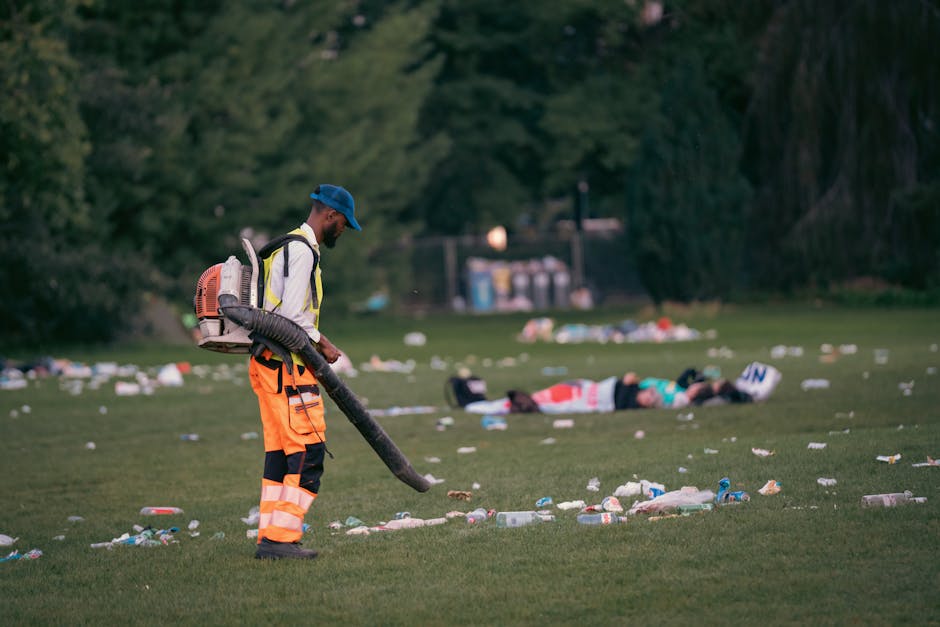
Fast rubbish clearance after events at Forbury Gardens
If you have just packed away marquees, folded tables, swept confetti, and looked at the leftover mess around Forbury Gardens, you already know the feeling: the event is over, but the work is not quite done. Fast rubbish clearance after events at Forbury Gardens is about getting the site back to normal quickly, safely, and without that awkward half-cleaned look that can spoil the last impression. Whether it was a community gathering, a private celebration, a corporate meet-up, or a public-facing activation, the cleanup has to happen fast, and it has to be handled properly.
In practice, that means more than just "taking the bins away". It means sorting mixed waste, removing bulky items, dealing with packaging and food waste, keeping access routes clear, and making sure the space is left tidy enough for the next day's visitors. If you are trying to judge what service you need, what to ask for, and how to avoid delays, this guide walks you through the whole process in plain English.
One thing people often underestimate? Event waste moves quickly from manageable to messy. A few hours later, light litter can become wet, sticky, windblown, and oddly stubborn. So yes, speed matters. A lot.
Table of Contents
- Why Fast rubbish clearance after events at Forbury Gardens Matters
- How Fast rubbish clearance after events at Forbury Gardens Works
- Key Benefits and Practical Advantages
- Who This Is For and When It Makes Sense
- Step-by-Step Guidance
- Expert Tips for Better Results
- Common Mistakes to Avoid
- Tools, Resources and Recommendations
- Law, Compliance, Standards, or Best Practice
- Options, Methods, or Comparison Table
- Case Study or Real-World Example
- Practical Checklist
- Conclusion
- Frequently Asked Questions
Why Fast rubbish clearance after events at Forbury Gardens Matters
Event waste is different from everyday rubbish. It tends to be mixed, time-sensitive, and visibly linked to the event itself. At a location like Forbury Gardens, where people value the setting, a delayed clear-up can be noticed straight away. Empty cups on the grass, cable ties near walkways, flattened boxes by the exit, or a forgotten stack of broken display materials can make the whole area feel neglected, even if the event itself was excellent.
Fast clearance matters for a few very practical reasons. First, it reduces disruption to other park users and nearby footfall. Second, it helps keep walkways, grassed areas, and entrances safe. Third, it prevents waste from spreading if the weather turns. To be fair, British weather rarely waits for anyone, does it? A dry pile of paper cups can become a wet, messy headache in one afternoon.
There is also the matter of presentation. If you are an organiser, exhibitor, venue manager, caterer, or local business, the way the site looks after the event says quite a lot about your standards. A clean, orderly finish is one of those small details people remember. Not always consciously, but they do remember it.
And then there is speed from an operational point of view. The longer waste sits, the more time staff spend dodging around it, the harder it can be to separate recyclable materials, and the more likely you are to need a heavier clean-up later. In other words, quick action usually saves effort twice.
How Fast rubbish clearance after events at Forbury Gardens Works
Fast event clearance is usually organised as a simple but disciplined process. It starts with a quick look at what was left behind, what type of waste is present, and how urgent the removal is. A good team will not just grab sacks at random. They will think about access, material type, volume, and the safest route for removal.
For a small event, the work might be straightforward: collect sacks, take away cardboard, remove catering waste, and clear loose litter from paths and edges. For a larger gathering, the job can involve multiple waste streams, a short loading window, and the need to move items without interrupting other site users. Sometimes the most time-consuming part is the awkward stuff: a damaged folding table, drinks crates, a stack of damp packaging, or a bin that has become a catch-all for everything under the sun.
A typical fast-clearance workflow looks something like this:
- Assess the site and identify the main waste types.
- Separate reusable, recyclable, and general waste where possible.
- Remove bulky items first so access stays open.
- Bag and load smaller waste safely and efficiently.
- Sweep or litter-pick remaining debris from the area.
- Do a final walk-through to check corners, entrances, and hidden spots.
That last step is easy to skip when everyone is tired, but it matters. Waste loves hiding in plain sight. A discarded lid under a bench, a cluster of bottle caps near a hedge, or a strip of tape stuck to a path can be missed if you rush too much. Speed is useful; chaos is not.
If you need broader support beyond event-specific waste, services such as general waste removal or business waste removal can be helpful when an event creates mixed rubbish that does not fit neatly into one category.
Key Benefits and Practical Advantages
There is more to rapid clearance than convenience. Done well, it improves safety, keeps the site usable, and makes the whole operation feel under control. That is especially important when you are dealing with a public space or a high-visibility setting.
1. Faster return to normal use. The sooner rubbish is removed, the sooner the area can be opened, inspected, or reset for the next activity.
2. Better first impressions. If staff, visitors, or local residents walk past after the event, they see order rather than leftovers. That counts more than people think.
3. Reduced trip and slip risks. Loose packaging, hidden glass, cable ties, and damp debris can all become hazards. Removal lowers that risk quickly.
4. Easier recycling. When waste is sorted early, cardboard, cans, plastics, and reusable materials are less likely to get contaminated.
5. Less stress for the organiser. A proper cleanup team removes a major headache from the end-of-day scramble. Truth be told, that is often worth as much as the physical rubbish removal itself.
6. Better control over costs. When waste is handled in a structured way, you are less likely to end up paying for avoidable rework, emergency callouts, or repeated collections.
If your event involved catering, temporary furniture, or display materials, it may also be useful to combine the clearance with related services such as furniture clearance, furniture disposal, or even builders waste clearance if there were temporary structures, fixings, or set-build debris to remove.
Who This Is For and When It Makes Sense
Fast rubbish clearance after events at Forbury Gardens is relevant to a wide mix of people. You do not need to be running a huge festival for this to matter. In fact, smaller events can be just as time-sensitive because they often have fewer hands on deck and less margin for error.
It makes sense if you are:
- an event organiser trying to clear the site before the next booking or public use
- a caterer left with food waste, packaging, and broken-down service items
- a business hosting a promotional or networking event nearby
- a facilities or site manager responsible for the clean handover
- a community group, charity, or school organising a local gathering
- an exhibitor with banners, boxes, and temporary display materials to remove
It also makes sense if the waste includes items that are awkward, bulky, or not suited to ordinary bags. That often includes chairs, broken signage, cardboard bundles, table legs, flooring offcuts, or mixed material that needs careful sorting.
For example, after a summer community event, you might be left with dry litter, drink containers, folding tables, and a few piles of cardboard from supplies. On a damp Sunday morning, the same waste becomes heavier, stickier, and slower to handle. The right clearance approach depends on timing just as much as volume.
If the event generated household-style overflow too, flat clearance or home clearance style support can sometimes be relevant for mixed domestic and event-related items, although the exact fit depends on the situation.
Step-by-Step Guidance
If you want a clean, efficient result, it helps to treat event clearance as a sequence rather than a scramble. Here is a practical way to approach it.
1. Walk the site before anyone starts lifting
Take five minutes and look at the site properly. Where is the waste concentrated? Are there wet areas, sharp objects, or access bottlenecks? Where will the team load items without blocking others? A quick scan saves a lot of backtracking.
2. Separate the easy wins first
Cardboard stacks, empty bags, and obvious general waste can often be removed quickly. Clearing the simple stuff first opens space to deal with the fiddly items later.
3. Deal with bulky items early
Large items create the most obstruction. Remove them first if safe to do so. This is the point where many jobs feel ten times easier, almost suspiciously so.
4. Sort recyclables where practical
If cardboard, clean packaging, or certain containers can be separated, do it early. Once mixed with food residue or wet waste, recycling becomes harder to recover cleanly.
5. Use the right loading method
Keep heavier items low and stable. Avoid overfilled sacks, especially if the route involves steps, uneven ground, or long carries. A bit of discipline here prevents avoidable mess.
6. Finish with a fine clean
Once the main waste is out, do a slower sweep for smaller debris. Think bottle caps, tape, receipts, and tiny scraps that catch the eye only when the obvious rubbish is gone.
7. Check the edges
Edges are where waste likes to hide: behind barriers, under benches, near entrances, and along fence lines. You can have a nearly spotless site and still miss one embarrassing cluster of litter. That happens more often than people admit.
8. Confirm handover standards
Before you sign the job off, walk the route once more. If the site is expected to be handed back, reopened, or photographed, this final look is worth it.
Expert Tips for Better Results
A quick clearance job can still be done intelligently. In our experience, the best results come from small, practical decisions rather than heroic effort at the end.
Tip 1: Plan waste points before the event starts. If bins and sacks are placed in the right spots from the beginning, the clear-up is dramatically easier. People are far more likely to use a nearby bin than walk halfway across a site with a half-empty cup in hand.
Tip 2: Keep a separate area for "not rubbish yet". Some items are not waste, but they are also not packed away. Temporary signage, reusable decor, cable reels, and reusable containers need their own staging space. Otherwise they get mixed in with everything else and the whole job slows down.
Tip 3: Think about weather early. Rain changes everything. Wet cardboard gets heavy, paper turns fragile, and loose litter travels. If the forecast looks grim, fast action matters even more.
Tip 4: Use labels or basic sorting cues. Even a low-tech setup helps. A few clear signs or colour-coded containers can reduce contamination and save time at the end. It is not glamorous, but it works.
Tip 5: Keep one person in charge of the final sign-off. Too many people doing the "last look" can mean nobody actually owns it. One clear decision-maker keeps the finish crisp.
There is also a quiet benefit to calm handling. When a team knows the plan, the whole site feels less frantic. That calmer pace often produces a better result in less time. Funny how that works.
If you are trying to improve overall waste habits around events, supporting services like recycling and sustainability and what can go in a skip can help people sort items more confidently before collection day.
Common Mistakes to Avoid
Most clearance problems are not dramatic. They are small oversights that pile up. The good news is that they are easy to prevent once you know what to watch for.
Leaving clearance until the next day. This is the classic mistake. Overnight waste can attract attention, become wet, or simply spread. If timing matters, act while the site is still in event mode.
Mixing everything together. Once recyclable cardboard is soaked in food waste or general refuse, it becomes much harder to recover properly. Separation is faster when it happens early.
Underestimating bulky items. One stack of broken frames or folded boards can take far more time than expected. Always factor in the odd item, not just the small bags.
Forgetting hidden spots. Behind bins, under benches, beside barriers, around loading points-these are the places where scraps linger.
Not checking access in advance. If vehicles, trolleys, or carrying routes are awkward, a fast job becomes a slow one very quickly.
Ignoring wet waste. Food waste, drinks spillages, and damp packaging can make bags heavier and more prone to splitting. Handle with care.
Assuming the job ends at the visible litter. It rarely does. Small fragments matter. A clean finish is in the detail.
Tools, Resources and Recommendations
The right tools make a big difference, especially when the goal is speed without sloppiness. You do not need anything flashy. You need the basics that let people work safely and efficiently.
Useful clearance tools often include:
- heavy-duty sacks
- gloves suitable for general handling
- litter pickers for small debris
- barrows or trolleys for short-distance movement
- sweeping tools for final tidy-up
- labels or simple sorting signs
- wrap or straps for bundling light bulky items
For larger or mixed event jobs, it can help to pair clearance with related services depending on what was used on site. For instance, if the event involved a temporary office or support room, office clearance may be more appropriate for desks, electronics, or paperwork. If the waste is primarily domestic-style or includes personal items, house clearance or loft clearance might be a better fit in some cases.
Likewise, if the event created awkward old furniture or seating, you may want a specialist route such as mattress and sofa disposal or fridge and appliance removal, depending on the item type. Not every job needs a dedicated vehicle, but the right category saves time and confusion.
Law, Compliance, Standards, or Best Practice
Any rubbish clearance work in the UK should be approached with proper care around safety, waste handling, and duty of care. You do not need to become a compliance specialist to organise an event clear-up, but you should work with a provider that treats waste responsibly and follows accepted practice.
As a general rule, waste should be handled, stored, moved, and transferred in a way that reduces risk to people and the environment. That means using suitable loading methods, separating hazardous or potentially hazardous items, and making sure materials go to the correct destination. If there is anything sharp, broken, contaminated, or unusual, it should be assessed properly before disposal. No cutting corners. Literally or otherwise.
For event organisers, best practice usually includes:
- planning waste handling before the event ends
- keeping walkways and exits clear during collection
- using sensible segregation for recyclable materials
- briefing staff so everyone knows what gets removed and what stays
- ensuring any contractor is insured and uses safe procedures
- avoiding the disposal of restricted or hazardous materials with general waste
If hazardous items are present, they need extra caution. That can include contaminated materials, chemicals, batteries, sharps, or anything else that should not simply be bagged up and forgotten about. For those situations, specialist handling is the safer route, and hazardous waste disposal should be considered where appropriate.
It is also sensible to look at provider standards around safety and handling. Pages such as health and safety policy and insurance and safety can help you understand the kind of safeguards a professional service should have in place.
Options, Methods, or Comparison Table
There is more than one way to clear event rubbish quickly. The best choice depends on volume, item type, access, and how fast you need the site back to normal.
| Method | Best for | Advantages | Limitations |
|---|---|---|---|
| Bag-and-load clearance | Light to medium mixed waste | Fast, flexible, simple to stage | Less efficient for bulky or awkward items |
| Bulk item removal | Furniture, boards, display items | Cuts obstruction quickly, improves access | Needs careful handling and enough loading space |
| Sorted recycling collection | Cardboard, clean packaging, cans | Helps reduce contamination and improve recovery | Requires some separation on site |
| Full site clearance | Larger events or tight handover deadlines | Most comprehensive and efficient end result | Usually needs more planning and a larger team |
If the event involved a lot of packaging, cardboard, and temporary materials, a pre-sorted approach often works best. If the site has a mix of tables, signage, bins, and loose waste, a more comprehensive collection is usually smoother. And if you are not sure which method fits, that is normal. Most people are not. Better to ask early than discover halfway through that you have ordered the wrong thing.
For people comparing broader disposal options, it can also help to review pricing and quotes before booking so there are fewer surprises later on.
Case Study or Real-World Example
Picture a community event that finishes on a Sunday afternoon at Forbury Gardens. There are fold-up chairs to remove, cardboard from refreshments, a few bags of food waste, some branding materials, and a scattering of paper cups near the exit. Nothing dramatic. But the site needs to be cleared quickly because the space must look presentable again before the next day's foot traffic.
Instead of tackling everything in the order it was noticed, the team does one calm walk-through first. They separate the bulky items from the smaller rubbish, place cardboard in a dedicated pile, and keep reusable event materials apart from general waste. One person handles the loading route, another does a slow sweep of the perimeter, and the final person checks for anything tucked under benches or barriers. Simple. Not fancy.
The result is that the area is cleared in stages rather than in one exhausting rush. The team avoids repeated lifting, waste does not get dragged through clean areas, and the site ends up looking properly finished rather than "mostly done". That last bit matters more than people admit. A nearly clean site can still look unfinished. A properly cleared site looks like someone cared.
In a slightly messier scenario, if an event includes leftover household-style items, storage clutter, or mixed personal belongings, a more specialised route may be needed. Services like sensitive clutter removal support can be more appropriate where the waste is not simple event litter but a more complex mix of items that needs careful handling.
Practical Checklist
Use this before, during, or immediately after an event cleanup. It keeps things moving and helps avoid the usual misses.
- Confirm the collection window and access route.
- Identify bulky items, loose litter, and recyclable materials.
- Keep reusable equipment separate from waste.
- Prepare sacks, gloves, and basic litter-picking tools.
- Check for wet waste, broken items, or sharp objects.
- Clear obstructive items first.
- Sort cardboard and clean recyclables where possible.
- Do a final sweep of edges, entrances, and hidden corners.
- Inspect the site once more before handover.
- Make a note of anything unusual for follow-up disposal.
Quick reminder: a tidy-looking site is not always a finished site. It is worth that extra two-minute walk. Honestly, those two minutes often save twenty later.
Conclusion
Fast rubbish clearance after events at Forbury Gardens is really about control, timing, and respect for the space. Get those three things right and the rest becomes much easier. You protect safety, keep the area presentable, reduce waste-handling stress, and leave the site ready for whatever comes next. That could be the public walking through the gardens, another event team arriving, or simply a clean handover at the end of a busy day.
The best approach is usually the simplest one: plan ahead, sort what you can, remove bulky items first, and finish with a proper final check. Nothing fancy. Just solid, careful work carried out at the right pace. And if you are dealing with mixed, bulky, or time-sensitive waste, professional support can make the whole thing far smoother than trying to improvise at the last minute.
Get a free quote today and see how much you can save.
When the job is done well, nobody talks about the rubbish. They just notice the space feels ready again. That quiet, clean ending is often the best outcome of all.
Frequently Asked Questions
How quickly can rubbish be cleared after an event at Forbury Gardens?
It depends on the volume, access, and waste types involved. Small event clear-ups can often be handled quickly, while larger or mixed waste jobs may need a more staged approach. The main thing is to arrange the collection window as early as possible so the space is not left sitting with waste overnight.
What types of waste are usually removed after events?
Common event waste includes cardboard, cups, food waste, plastic packaging, banners, broken display materials, and bulky items like folding chairs or temporary fixtures. The exact mix depends on the event, but it is rarely just one thing. Usually it is a bit of everything.
Do I need a specialist service for event rubbish clearance?
If the waste is straightforward and mostly bagged, a general clearance service may be enough. If there are bulky items, mixed materials, or items that need careful handling, a more tailored service is often the better choice. That saves time and reduces the chance of missed items.
Can recyclable materials be separated during clearance?
Yes, and ideally they should be. Clean cardboard, cans, and some packaging are much easier to recycle when they are kept separate from food waste and wet rubbish. Once mixed, recycling becomes less efficient and sometimes impossible.
What should I do with bulky furniture or display items?
Remove them early if it is safe to do so. Bulky items create the most obstruction and can slow the rest of the cleanup. If they are unsuitable for ordinary waste handling, use a clearance route that is designed for furniture or larger items.
Is fast event clearance safe in a public place like Forbury Gardens?
Yes, as long as it is planned properly. Safety comes from keeping routes clear, using the right handling method, and avoiding rushed lifting or blocked access. A careful, organised approach is much safer than trying to do everything at once.
What happens if there is wet waste or bad weather?
Wet waste becomes heavier and more awkward to move, so it should be handled carefully. Rain can also spread litter and make cardboard difficult to manage. In poor weather, prompt clearance becomes even more important because the mess can grow fast.
How do I know whether I need rubbish removal or a skip?
If the waste is already bagged, mixed, and ready to go, removal is often the more practical option. If you expect a larger, ongoing build-up and need a container on site, a skip may suit better. It really comes down to timing, space, and how the waste is being produced.
Are there items that should not go with general event waste?
Yes. Sharp objects, hazardous materials, batteries, chemicals, and contaminated items need extra care and should not be thrown into ordinary waste without proper assessment. Those items need to be separated and handled correctly.
How can I reduce event rubbish before the cleanup starts?
Use clear bin points, brief staff on where waste goes, and keep reusable materials separate from disposable ones. Simple planning makes a big difference. You can cut the cleanup time noticeably just by setting things up well before the event begins.
What should I ask before booking a clearance service?
Ask what they handle, how quickly they can attend, whether they can manage bulky or mixed waste, and what their pricing includes. It is also sensible to ask about safety and disposal practices. A clear answer up front usually saves headaches later.
Can event waste clearance help with sustainability?
Yes. A sorted, well-managed clearance makes it easier to recover recyclables and reduce unnecessary disposal. It is not a magic wand, but it does help keep better materials out of general waste streams. Small steps add up.